Teaspoon Telegraph
The Teaspoon Telegraph is a 3D printed, straight Morse key that uses a conductive teaspoon as the lever arm. It uses an elastic band as the spring, and a magnetic contact behind the spoon. It will work with most teaspoons between 130 and 150 millimetres in length.
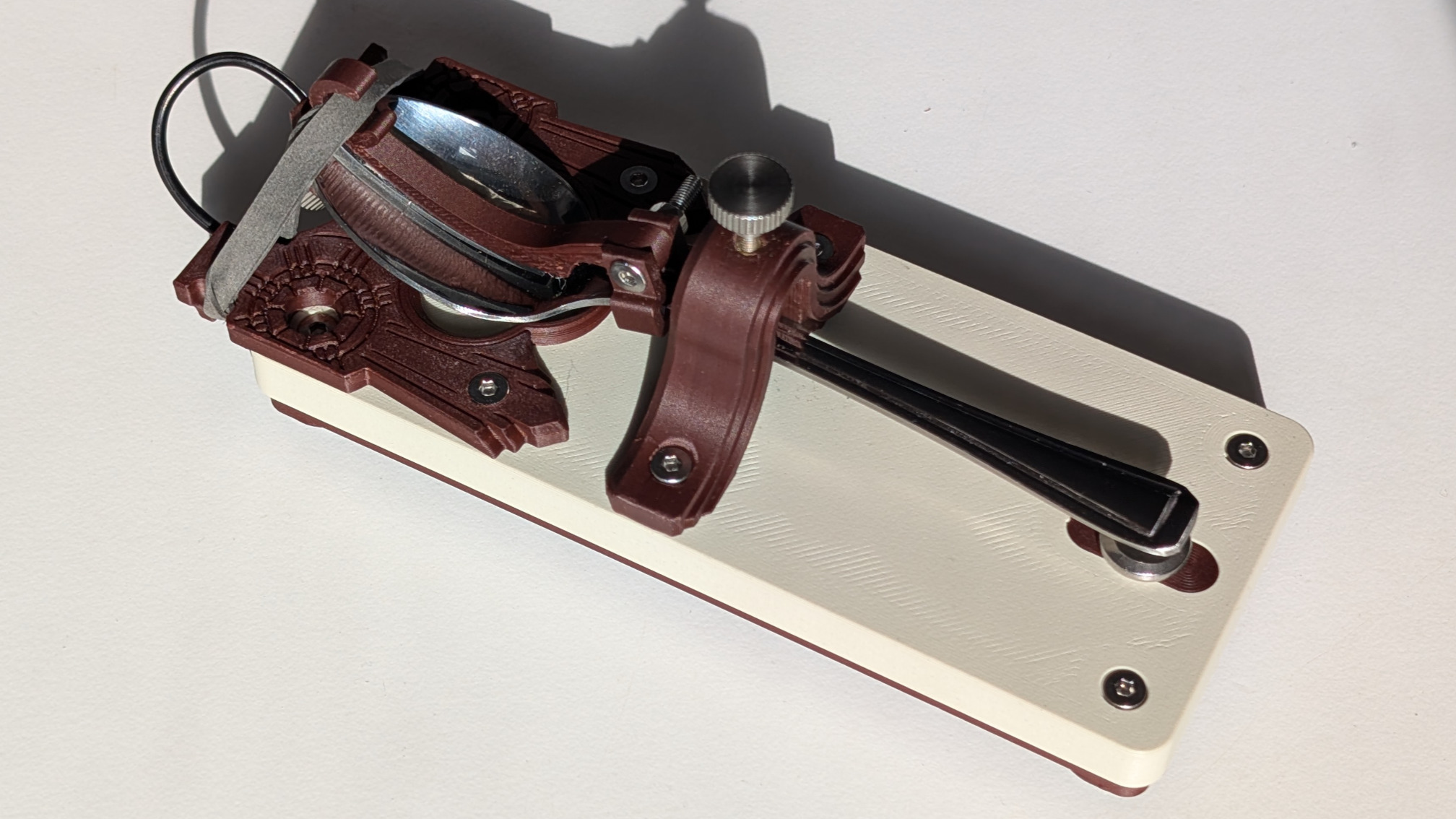
The Teaspoon Telegraph was designed by David Hayward, between September and December 2025, for the release of Alex Johansson's game MORSE.
Documentation
If you want to print, build or use a Teaspoon Telegraph, here are the docs and files you need. Last updated Dec 16th, 2025.
If you've received a built key and would like to know more about it, start here.
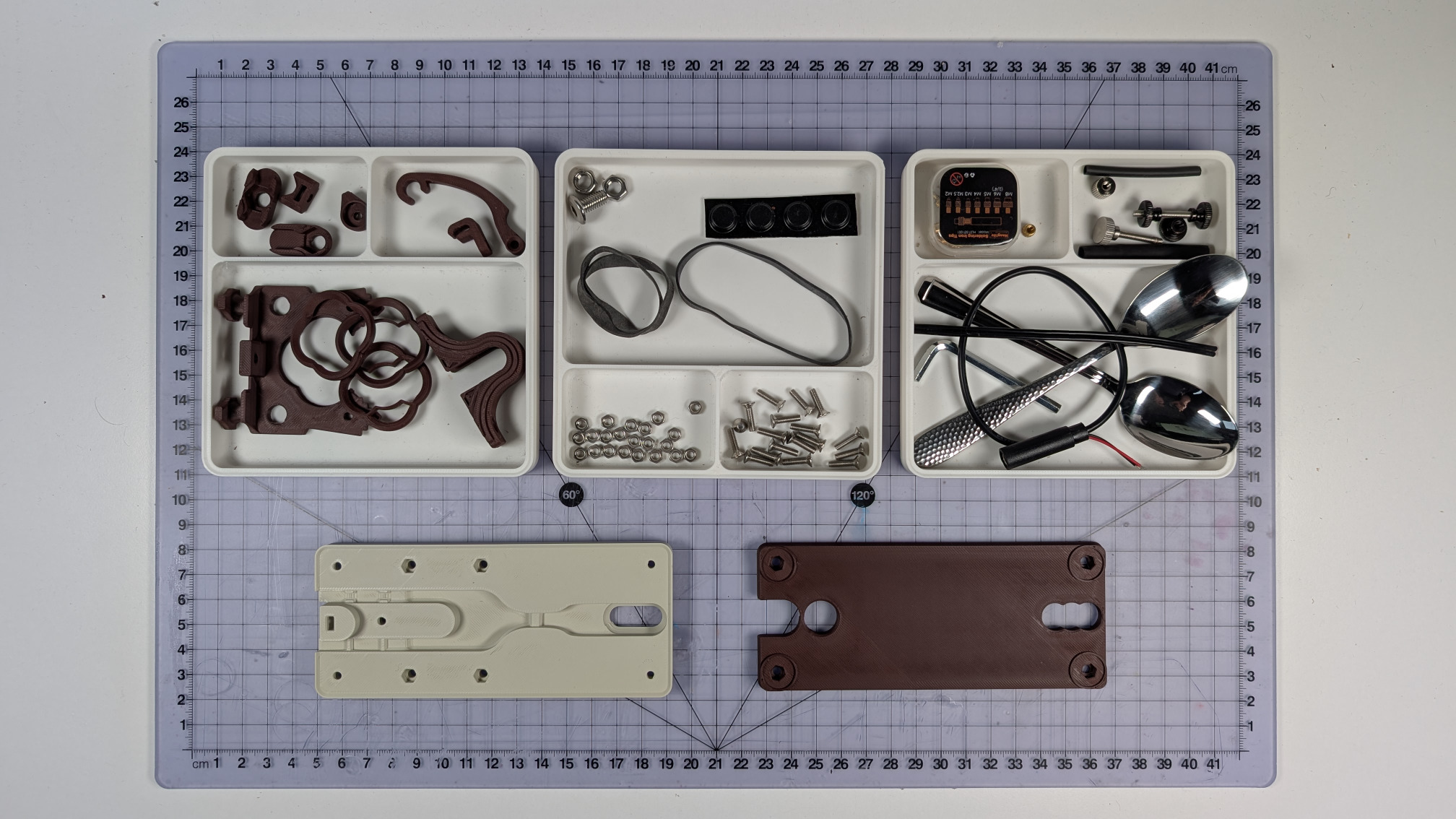
Fixings, etc. needed to complete.
Print Files
.3mf, .stl, and .step formats, available on Github, MakerWorld, and Printables.
First draft.
If you've got the parts, here's how to put it all together.
Why?
This year, my friend Alex was finishing his game MORSE, which is controlled by inputting coordinates using Morse Code. He hired me to do launch production, so he could concentrate on development. We both also have backgrounds building weirdgame controllers, so I said "It'd be really nice to offer a 3D printable Morse key to people". Things quickly escalated.
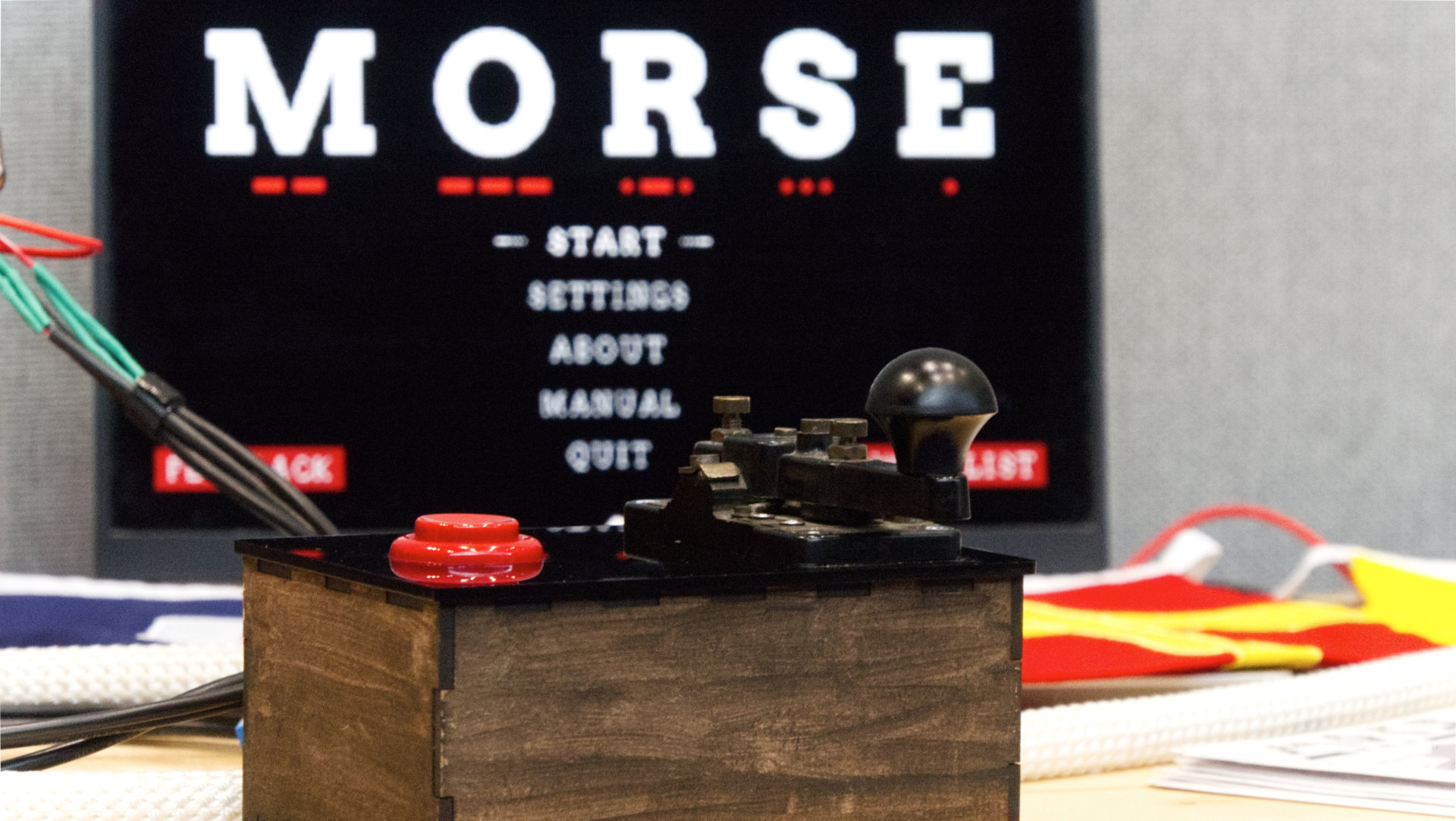
I was partly driven to make this by getting to try out some nice Morse keys. Alex had shown MORSE at many games events with a selection of antique keys, and some original Bakelite radio operator headphones. The main key for events is this one, made from an old straight key mounted to a box, with an arcade button for fire control:
To our infinite delight though, at Hamfest 2025, Alex found that some players arrived with their own Morse keys to plug in! Alex acquired a few more keys of his own, including this chunky sideswiper:
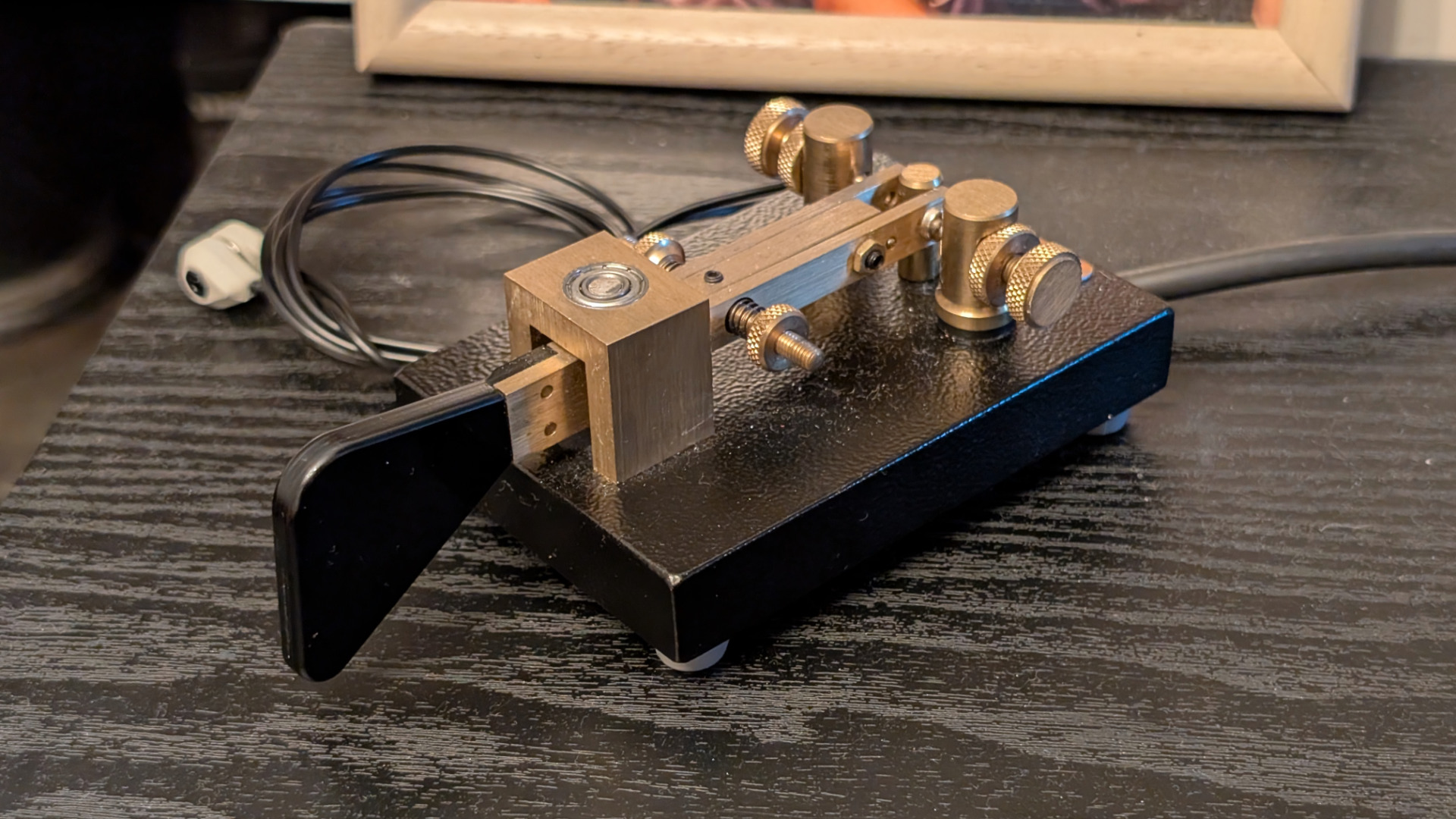
I was struck by how solid it felt, and how expensive such keys can be. Just look at some of Forrest (KI7QCF)'s collection. They're beautiful machines, and they cost hundreds of dollars.
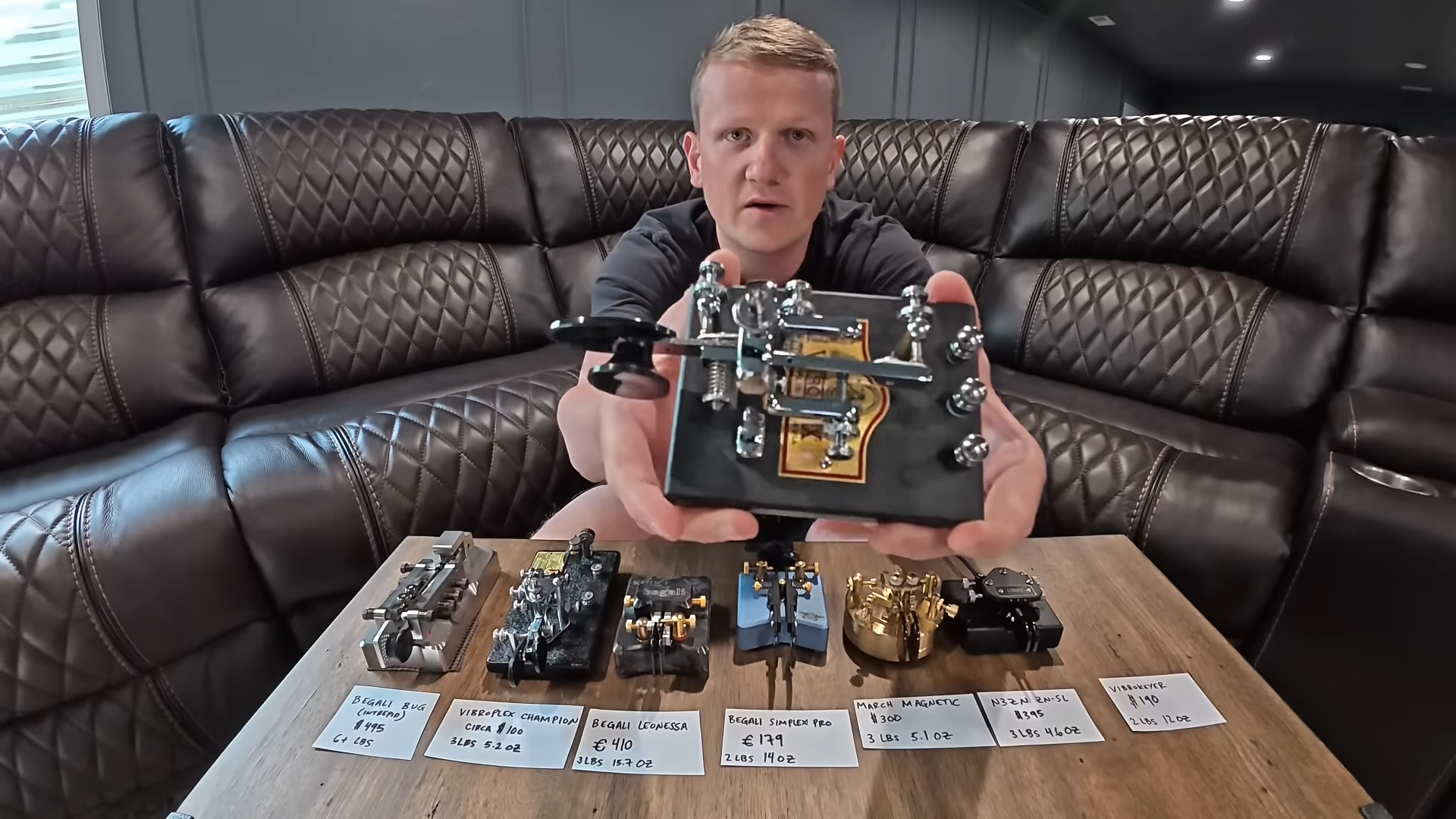
Trawling 3D print portals, the main problem I saw with ones already out there was that they were entirely made of plastic. I felt there was no point making another such example and, more importantly, that a plastic key wouldn't feel anywhere near as nice as I wanted.
Often, 3D prints are designed with the objective of printing a complete object in one go, even with moving parts. Print-in-place can be a strength, enabling some really cool mechanisms and assemblies that would otherwise be impossible to make. Morse keys aren't so mechanically complicated though, and my aims were different.
As a maker, I prefer to understand each tool as part of a bigger process; never just some box with a magic button that does all the work for me. A process approach to tools almost always leads me to better results.
As a designer, I wanted the Teaspoon Telegraph to feel like an object of decent quality, while still being inexpensive to make. Designing something as an assembly of parts combined with standard fixings can go a long way toward both of those goals.
Having poked at Alex' collection of Morse keys, I knew the lever-arm of mine would have to be metal. Furthermore, it couldn't be a custom machined component; it had to be a ready made object that anyone could source. I spent a weekend considering options like bolts, wrenches and door knob spindles. Nothing seemed quite right until that Sunday when, making a cup of tea, I opened the cutlery drawer and exclaimed "Oh!"
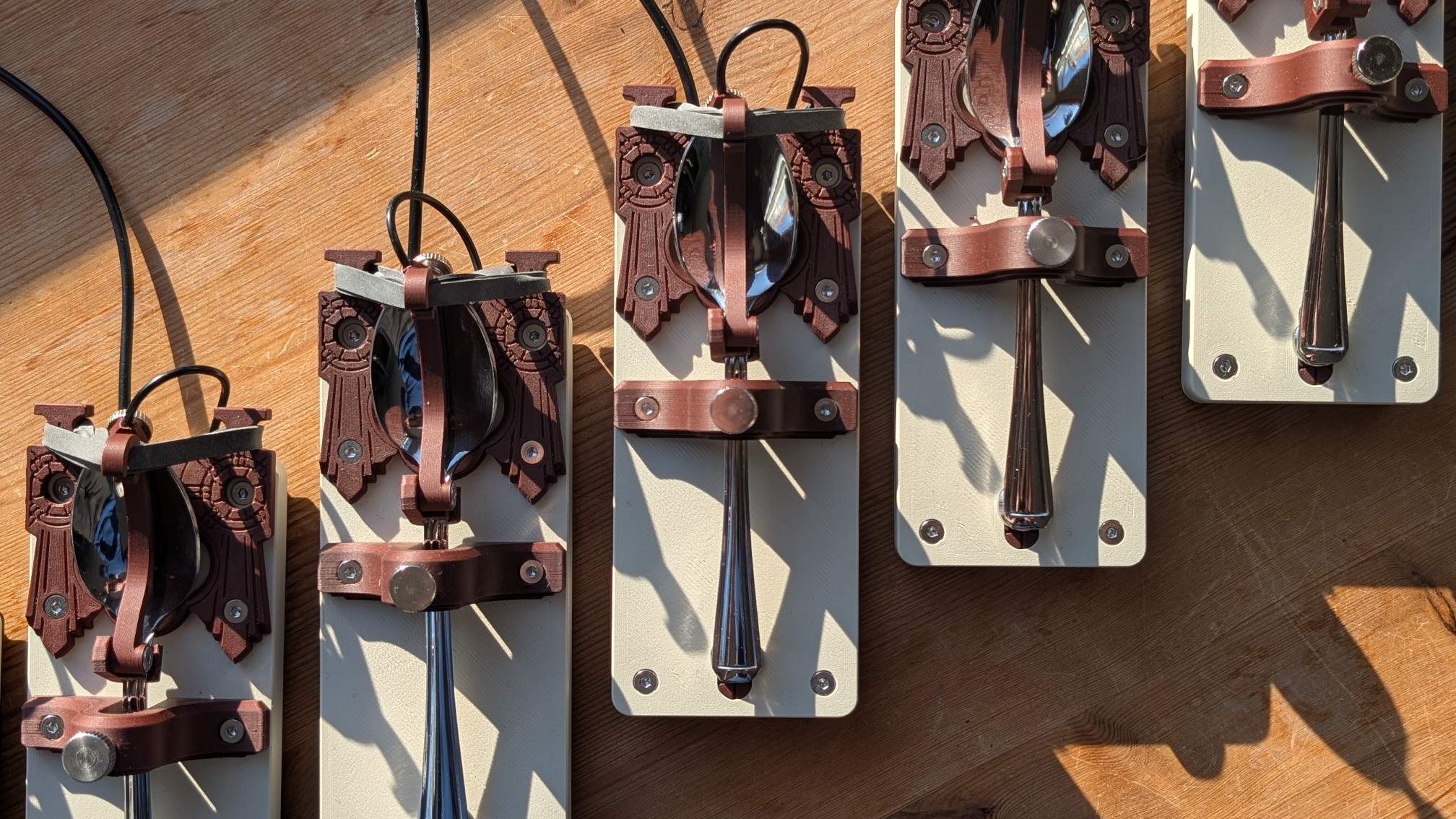
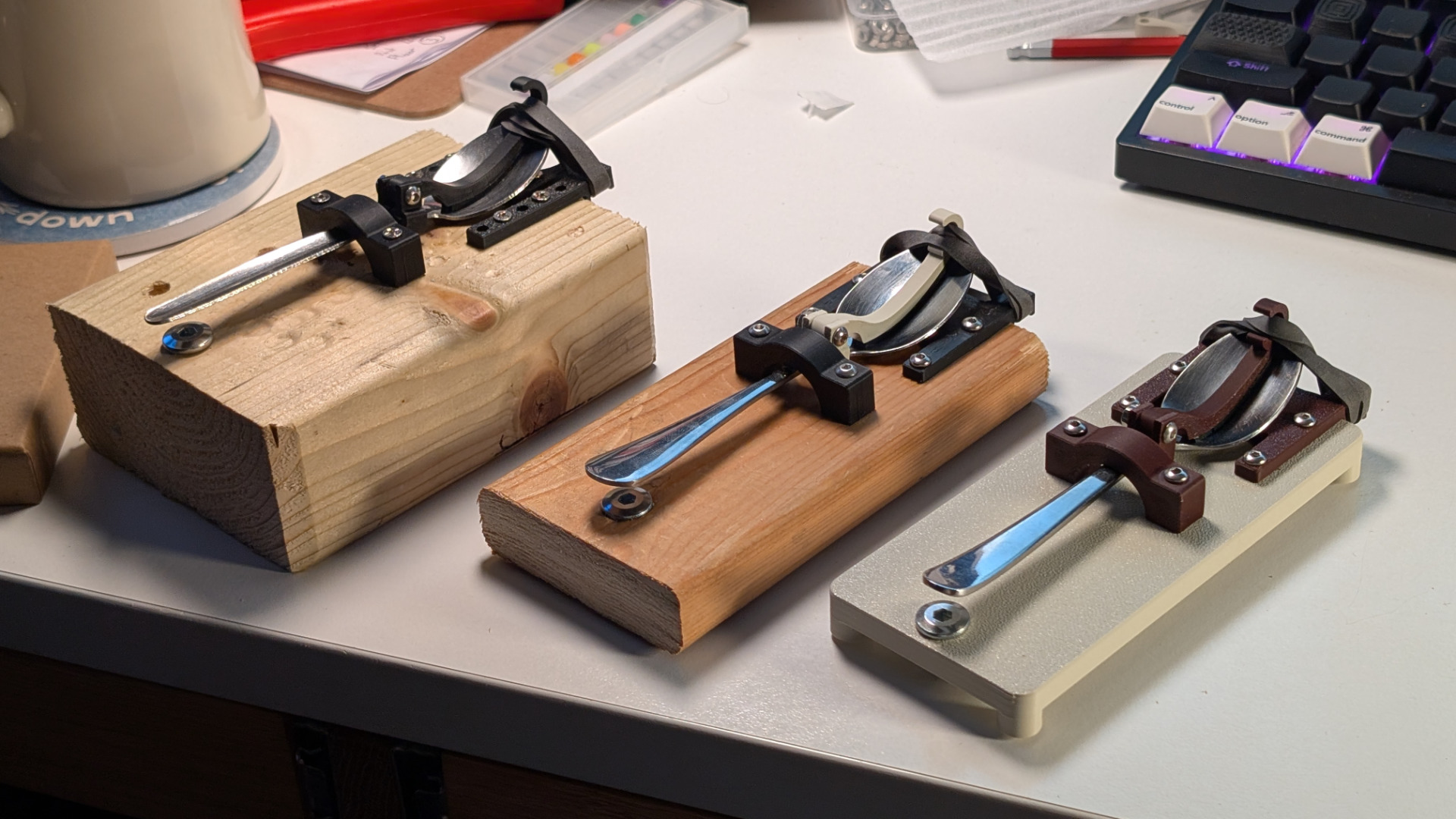
Conceptually, the mechanics of a straight key built around a teaspoon came together in seconds, and the first janky prototype was ready that afternoon. It was a few hastily designed parts screwed to a ratty old bit of two-by-four, because unlike the many nice scraps of wood I have, that one was in arms reach. Below are some of the prototypes, from it to version seven.

The first few prototypes had an enormous amount of side-to-side slop, which felt awful. Version three was the first one with a 3D printed baseplate.
I hated it until Alex said "It looks like something from an 80's office clearance". While the domed epoxy branding sticker of my dreams no longer seems to exist, vintage pin badges for defunct computing brands very much do. Look at this horrible little thing; designed for an office where people chain-smoke in front of CRT monitors:
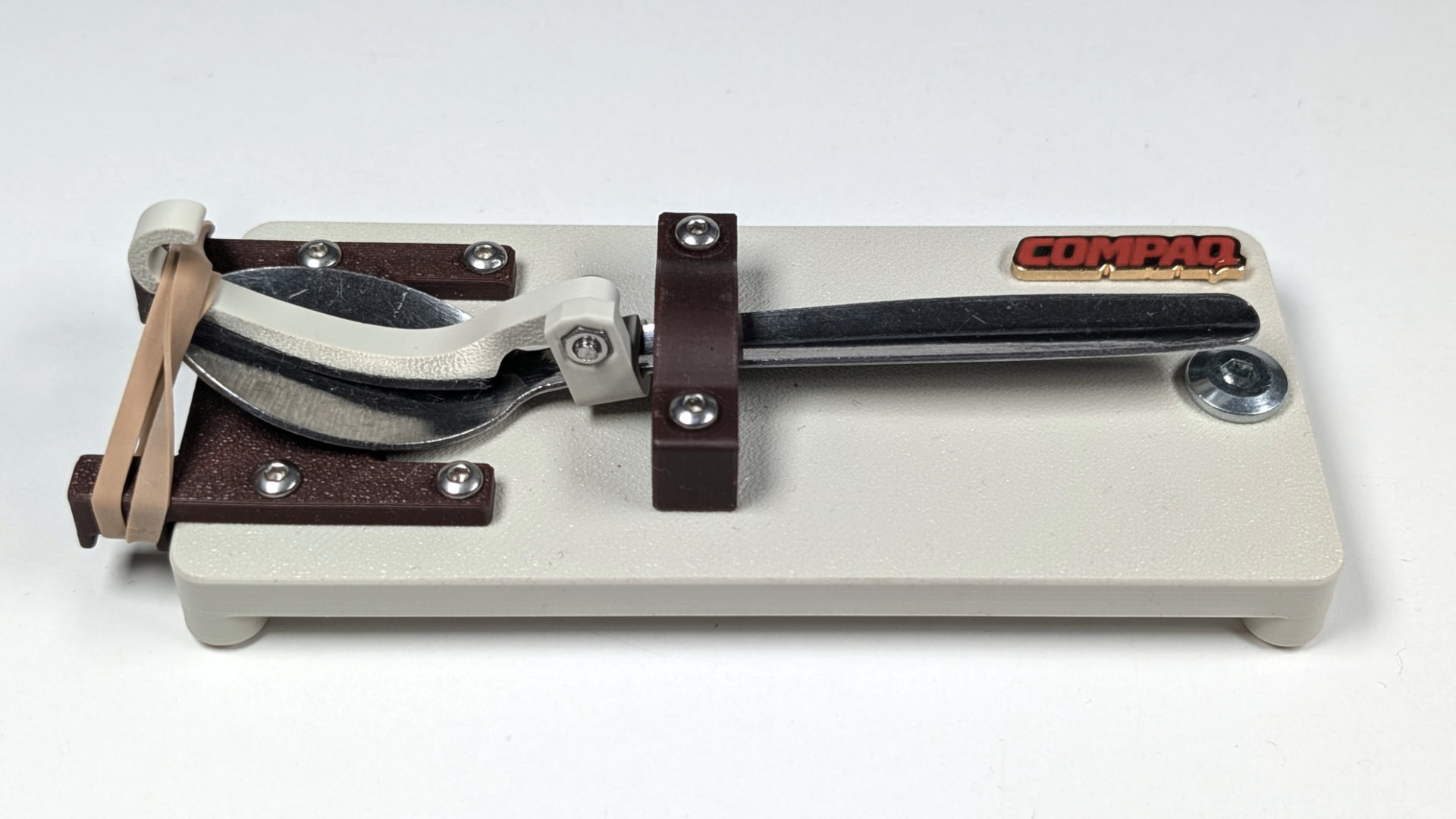
By version five it looked much nicer, with a travel adjust design that largely eliminated lateral slop, while still accommodating different widths of spoon neck. Setting version six up with a small contact gap at the front, I was surprised to find that instead of sliding on the contact points at the back, the spoon travel came entirely from vertical flex in the handle. Suddenly it felt like a serviceable key, with a pleasing click.
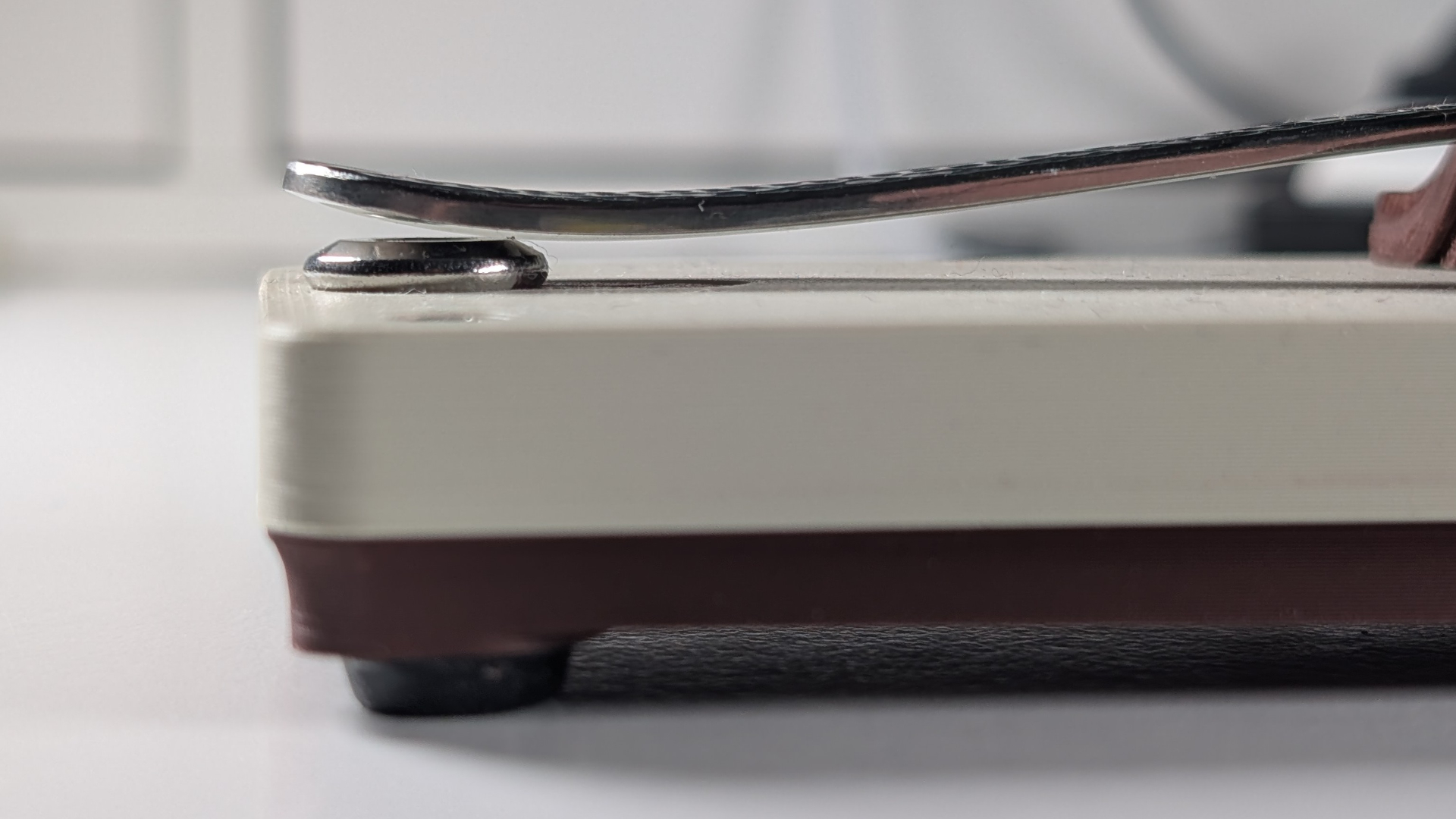
Obviously, that now meant it needed an aesthetic upgrade. The matte ruby red PLA shown here, while not an exact match for Bakelite, is close enough to evoke it for me. Given Bakelite was patented in 1907, and MORSE is set during World War 1, Art Deco styling seemed appropriate.
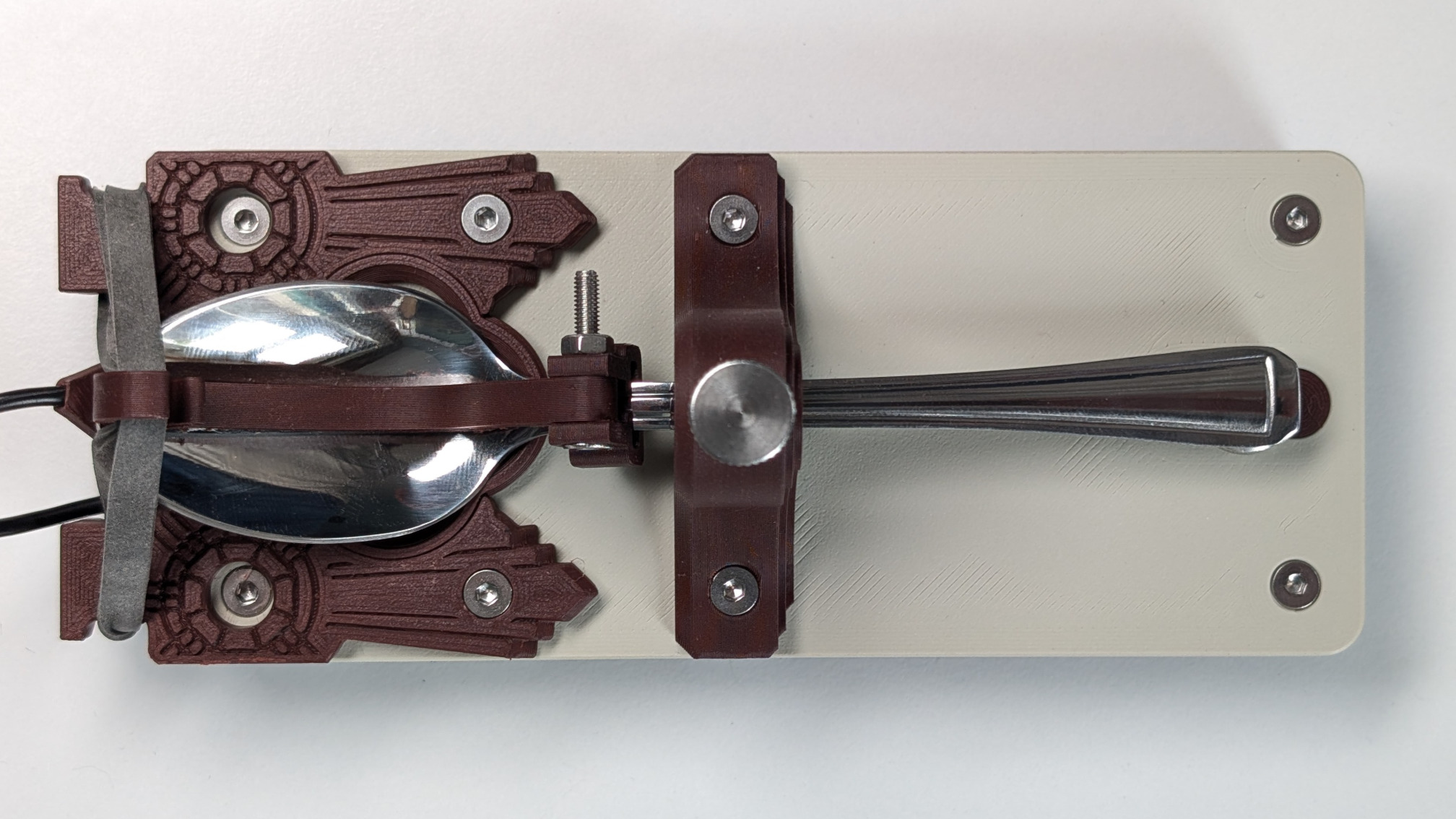
In its time, Bakelite opened up all kinds of new forms and shapes to designers. In a similar way today, 3D printing has made it much easier for people to create intricately formed objects at home. As soon as reliable 3D printers appeared (i.e. the printer can now be a tool rather than a hobby), some projects I'd been putting off for years became more feasible.
Instead of spending hours filing small chunks of material into a semblance of precision, or doing high stakes operations on critical-but-delicate components, I can rapidly work through successive generations of a part. Failures that would previously take the wind right out of a handmade project are now rocket fuel for iteration. I certainly won't be hanging up my hand tools, but 3D printing has been such a powerful thing to add to the toolbox. It can mesh beautifully with other processes and materials.
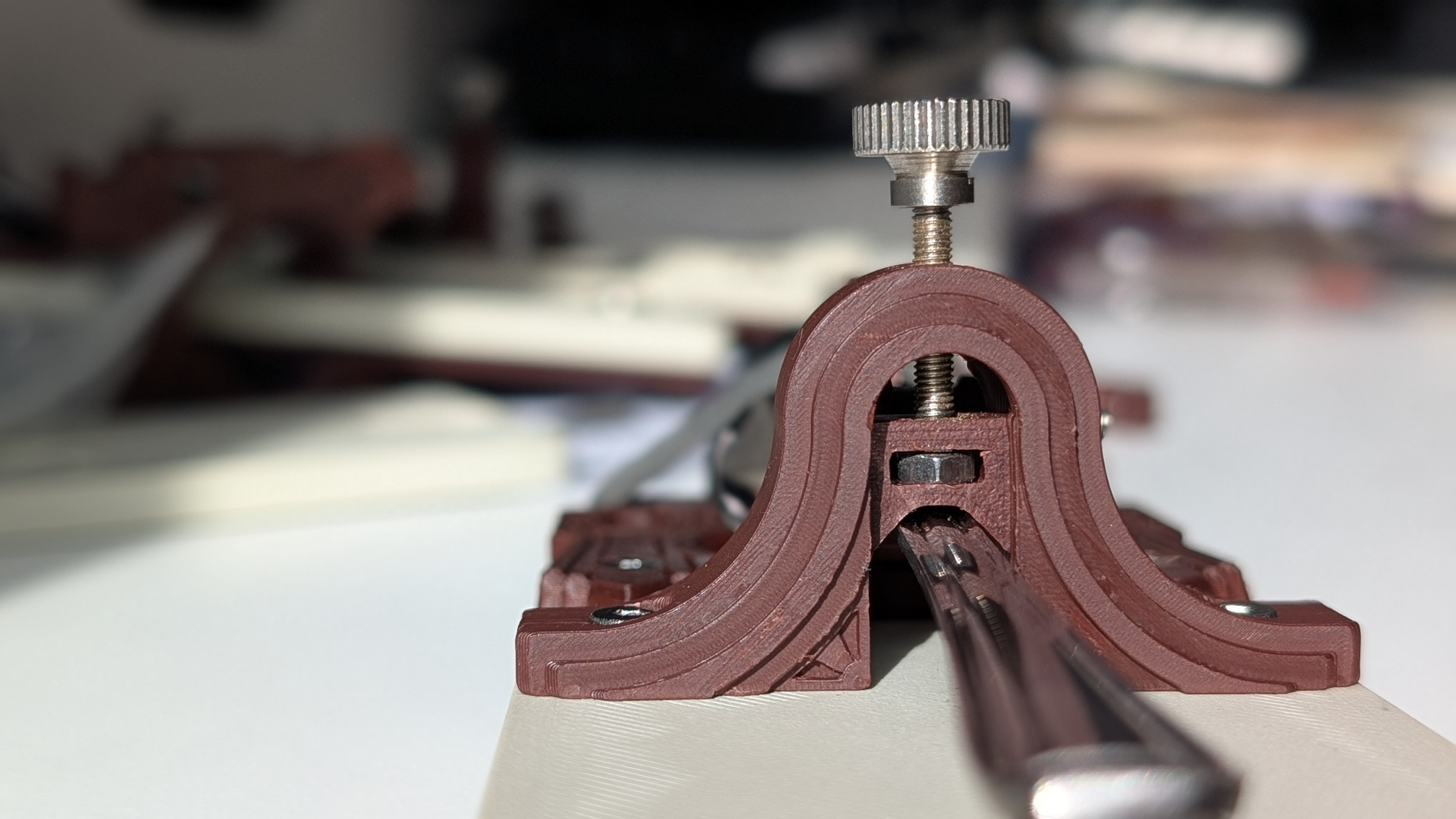
The Teaspoon Telegraph has been a great way to progress my CAD and 3D printing skills. It might not be a fine Morse key; I doubt it would compete with any of the expensive ones above. It has, however, turned out to be much nicer than the novelty I first expected it to become.
I'm very pleased with the result, and also with how Alex has done getting MORSE out into the world. How many videogames can say they're backwards compatible with hardware all the way to 1847? It's been joyous to see my friend complete a long-term project; to watch him find a community of engaged, creative, welcoming people in amateur radio; and to design an object that people seem delighted by.
You can be the judge of how well I've done, mechanically and aesthetically, but Art Deco struck me as a perfect fit for this. It seemed just the right thread to trace a line through 21st Century DIY plastics, a videogame set in the early 20th Century, and a device invented in the 19th.
I never once thought of the Teaspoon Telegraph as a product or business. I designed it as a gift for a good friend, and beyond that it was only ever going to be open source. So far I've been really enjoying peoples responses, and am looking forward to seeing whatever you all do with it.
73, David H